
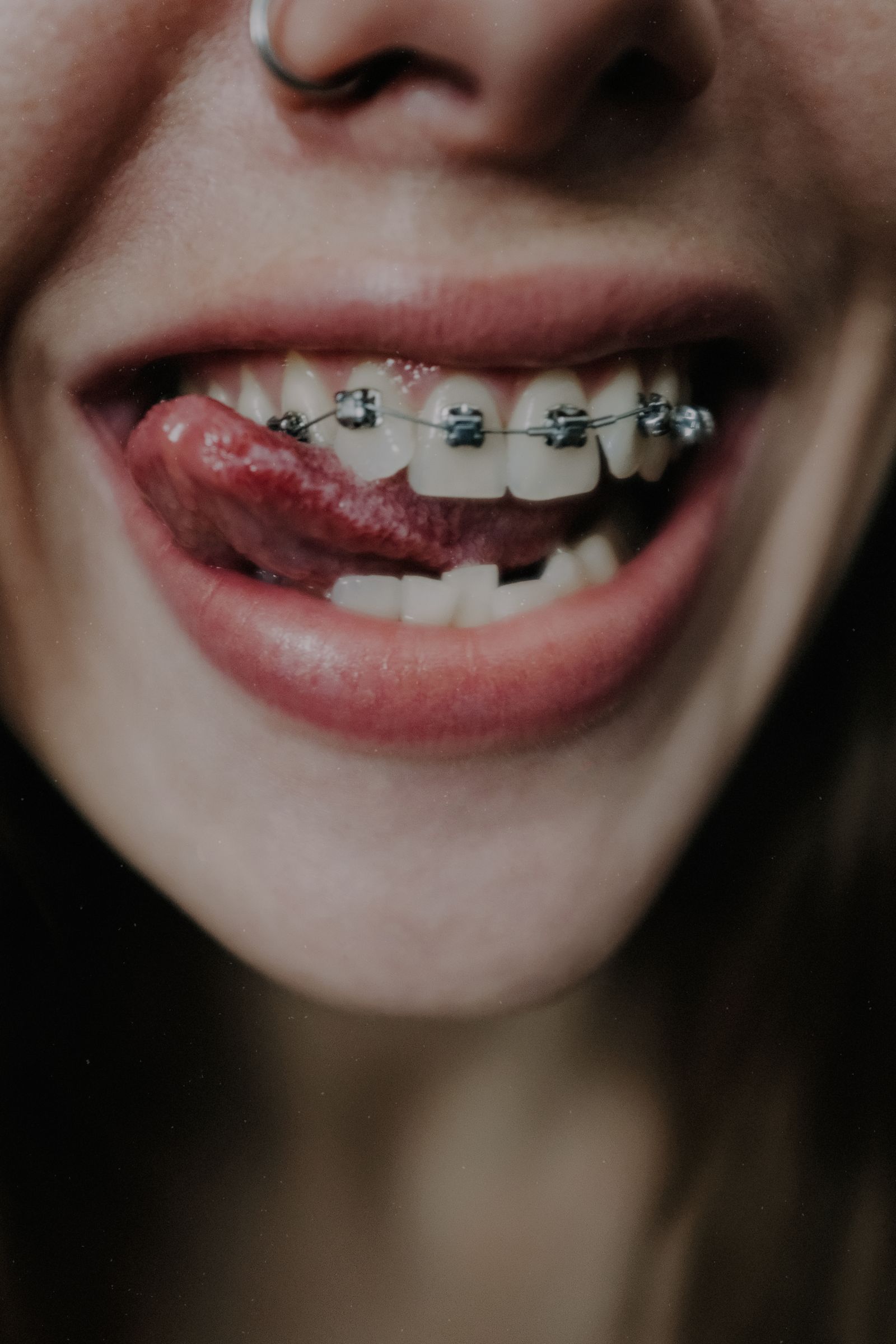
Crooked teeth are rarely just a cosmetic issue. Crowded teeth are harder to clean and decay faster. A misaligned bite wears enamel unevenly, strains the jaw joint, and can cause headaches nobody connects to their teeth. Straightening teeth fixes how a smile looks — but the health case is often just as strong.
Both move teeth the same way: sustained gentle pressure remodels the bone around the roots. The difference is in the mechanics and the lifestyle. Fixed braces — metal or ceramic — work around the clock, handle complex corrections, and don’t depend on your discipline. Clear aligners are nearly invisible, removable for meals and brushing, and far more comfortable socially — but they only work if they’re on your teeth 20-22 hours a day. At your consultation we’ll tell you honestly which options can achieve your correction; not every case suits aligners, and a good orthodontist says so upfront.
We start with a digital scan — no more gagging on impression trays — and map your current bite against the target result. With aligners, you’ll actually see a 3D simulation of the planned movement before you commit. Fixed braces are adjusted every four to six weeks; aligner patients switch trays at home every one to two weeks with progress checks in between. Most treatments run 6 to 24 months depending on complexity.
Teeth have memory — they drift back toward their old positions if nothing holds them. Every treatment at Dermax Medical Center ends with a retention plan: a discreet fixed wire behind the front teeth, a clear night-time retainer, or both. Retention is not an optional extra; it’s the half of orthodontics that protects the investment.
Orthodontics is a two-year relationship, not a product purchase. Our orthodontists plan every case on digital records, show you the projected result before treatment starts, and see you personally at every adjustment — the same clinician from first scan to final retainer. If your case can be treated faster, simpler, or cheaper than you expected, we’ll tell you that too.


Wondering whether aligners would work for you, or whether your child needs early treatment? Book an orthodontic assessment at Dermax Medical Center in Dubai — you’ll leave with a scan, a clear diagnosis, and every option explained.
For mild to moderate crowding, spacing, and bite issues — yes, with results matching fixed braces. Severe rotations, large bite corrections, and some tooth movements still respond better to braces. The honest answer depends on your scan, which is exactly what the consultation determines.
Simple alignment cases finish in 6-9 months; typical cases run 12-18 months; complex bite corrections can take 24. Aligner treatment time depends heavily on wearing them 20-22 hours daily — the plastic can't work from a drawer.
Expect pressure and tenderness for two to three days after fittings and adjustments — manageable with ordinary painkillers and soft food. Aligners cause similar mild pressure with each new tray. Sharp or persistent pain isn't normal, and we'll see you promptly if it happens.
No. Teeth move at any age as long as gums and bone are healthy — we treat patients in their fifties and sixties regularly. Adult treatment sometimes takes slightly longer, and aligners make it socially invisible, which is why most of our adult patients choose them.
Around age seven. Most children won't need treatment that early, but a short assessment catches jaw growth issues and habits (thumb-sucking, mouth breathing) while they're still easy to redirect. Early interception can turn a future two-year treatment into a six-month one.
Teeth drift back — slowly at first, then noticeably within months. It's the most common way a perfect result gets ruined. Night-time retainer wear is a small habit that protects years of treatment, and fixed retainers do the job invisibly with zero daily effort.

Dermax Medical Center, your premier destination for medical, health, and aesthetic care in Dubai
DermaX Medical Center © 2026 All Rights Reserved. | Made with ♥ by BAYREZ
WhatsApp us