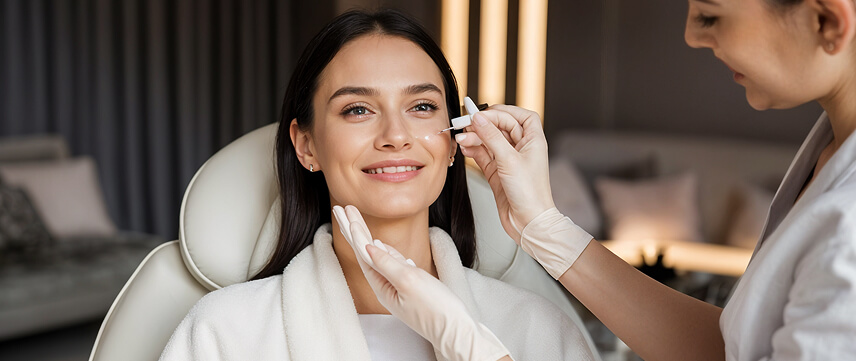
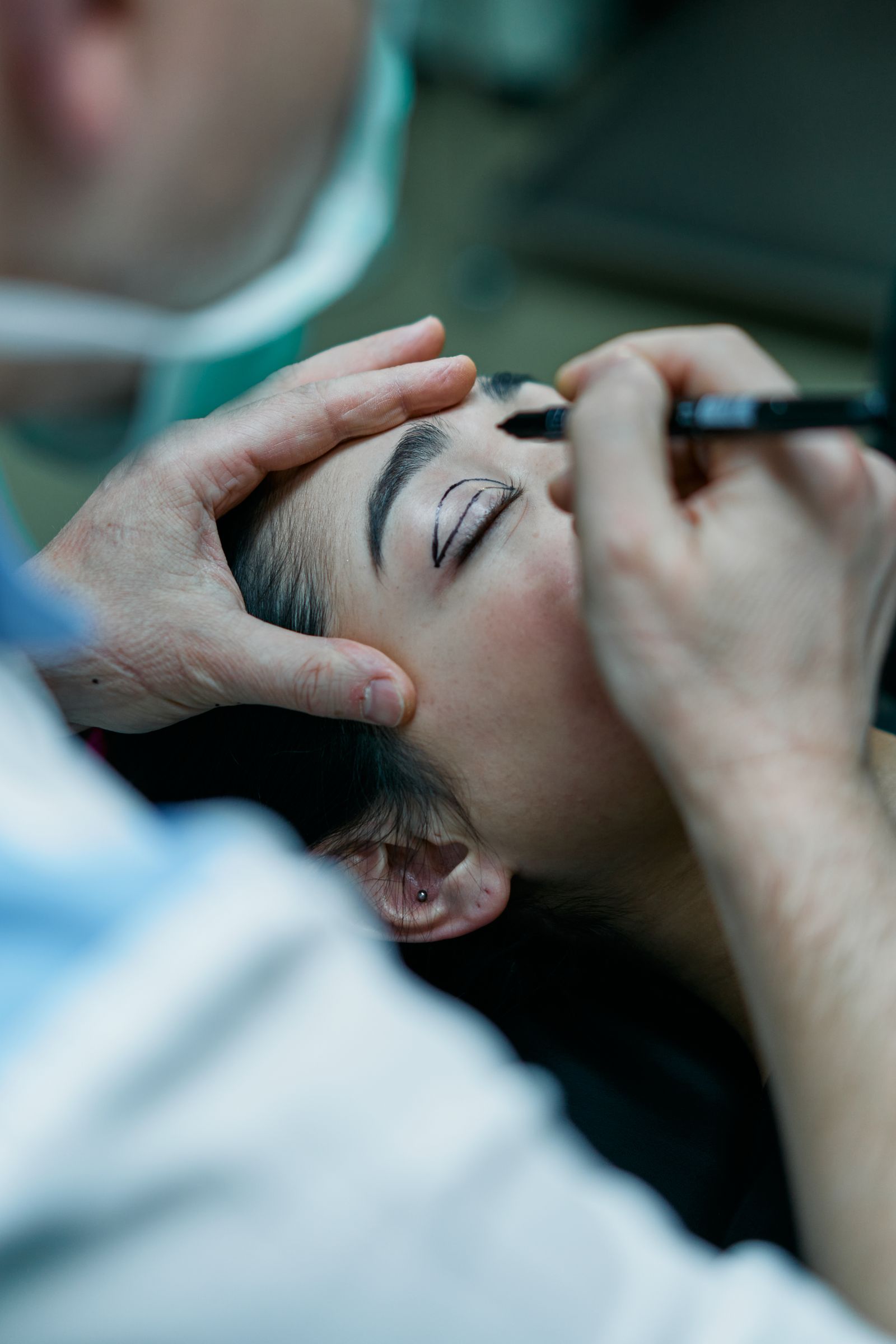
There comes a point where injectables and devices stop being the honest answer. Skin that has genuinely loosened, heavy eyelids that make every photo look tired, a neck that no exercise addresses — these are structural changes, and structural changes have surgical answers. Facial surgery, done well, doesn’t make you look different. It makes you look like yourself, a decade earlier.
Facelift and neck lift surgery reposition deep tissue — not just skin — restoring the jawline and neck angle that define a youthful profile. Blepharoplasty (eyelid surgery) removes the excess skin and puffiness that make eyes look exhausted; it’s often the highest-impact facial procedure for the least recovery. Rhinoplasty reshapes the nose in balance with the rest of the face. Otoplasty corrects prominent ears. Facial fat transfer restores volume using your own tissue, alone or alongside a lift.
The tight, wind-swept faces of old surgery came from pulling skin alone. Modern facelifts work at the deeper SMAS layer, repositioning the structures that actually sagged, so skin lies naturally without tension. The result ages gracefully rather than snapping back — and scars hide in the hairline and natural creases around the ear. This is why technique selection at consultation matters more than any brochure promise.
Facelift and neck lift patients are typically socially presentable at two to three weeks, with subtle refinement continuing for months. Eyelid surgery recovers faster — a week to ten days. Rhinoplasty splints come off at one week, though the final shape settles over a year. We plan follow-ups through the entire arc, and your surgeon — not an assistant — sees you at each one.
Facial surgery is unforgiving of shortcuts — anatomy is dense, margins are millimetres, and everyone sees the result. Our surgeons operate at the deep tissue plane where natural results come from, plan every case on your bone structure and tissue quality, and are candid about what surgery can and cannot achieve at your starting point. Accredited facilities, unhurried consultations, and follow-up measured in months, not days.
If you’ve reached the limits of non-surgical options — or simply want a straight answer about what would genuinely help — book a facial surgery consultation at Dermax Medical Center in Dubai. Honest assessment first; decisions only when you’re ready.
A well-executed deep-plane facelift typically holds eight to twelve years, and you remain permanently "ahead" of where you would have been without it. Ageing continues, but from a better starting point. Skin quality, sun protection, and stable weight all extend the result.
Not with modern technique. The stretched look comes from tightening skin instead of repositioning the deeper layer beneath it. When the foundation is lifted and skin is simply re-draped, tension disappears — and so does the telltale look. Reviewing your surgeon's healed results is the best reassurance; ask to see them.
Frequently, yes — it's one of the most efficient procedures in facial surgery. Removing hooded upper-lid skin or under-eye bags visibly refreshes the entire face in about a week of recovery. Many patients start there and find they want nothing more for years.
Less than most people expect. Facelift recovery is dominated by tightness and swelling rather than sharp pain; eyelid and nose surgery are similar. Prescribed medication covers the first days comfortably. The real challenge is patience with the mirror while swelling resolves — we prepare you for that timeline honestly.
Yes — facelift with neck lift and eyelid surgery is a classic combination: one anaesthetic, one recovery period, and results that age in harmony. Safety limits total surgical time, so combinations are planned case by case after your health assessment.
When the anatomy calls for it, not the birthday. Most patients are between 45 and 65, but tissue quality matters more than age — operating when laxity is moderate often gives longer-lasting, more natural results than waiting for it to become severe. An assessment will tell you where you actually stand.

Dermax Medical Center, your premier destination for medical, health, and aesthetic care in Dubai
DermaX Medical Center © 2026 All Rights Reserved. | Made with ♥ by BAYREZ
WhatsApp us