
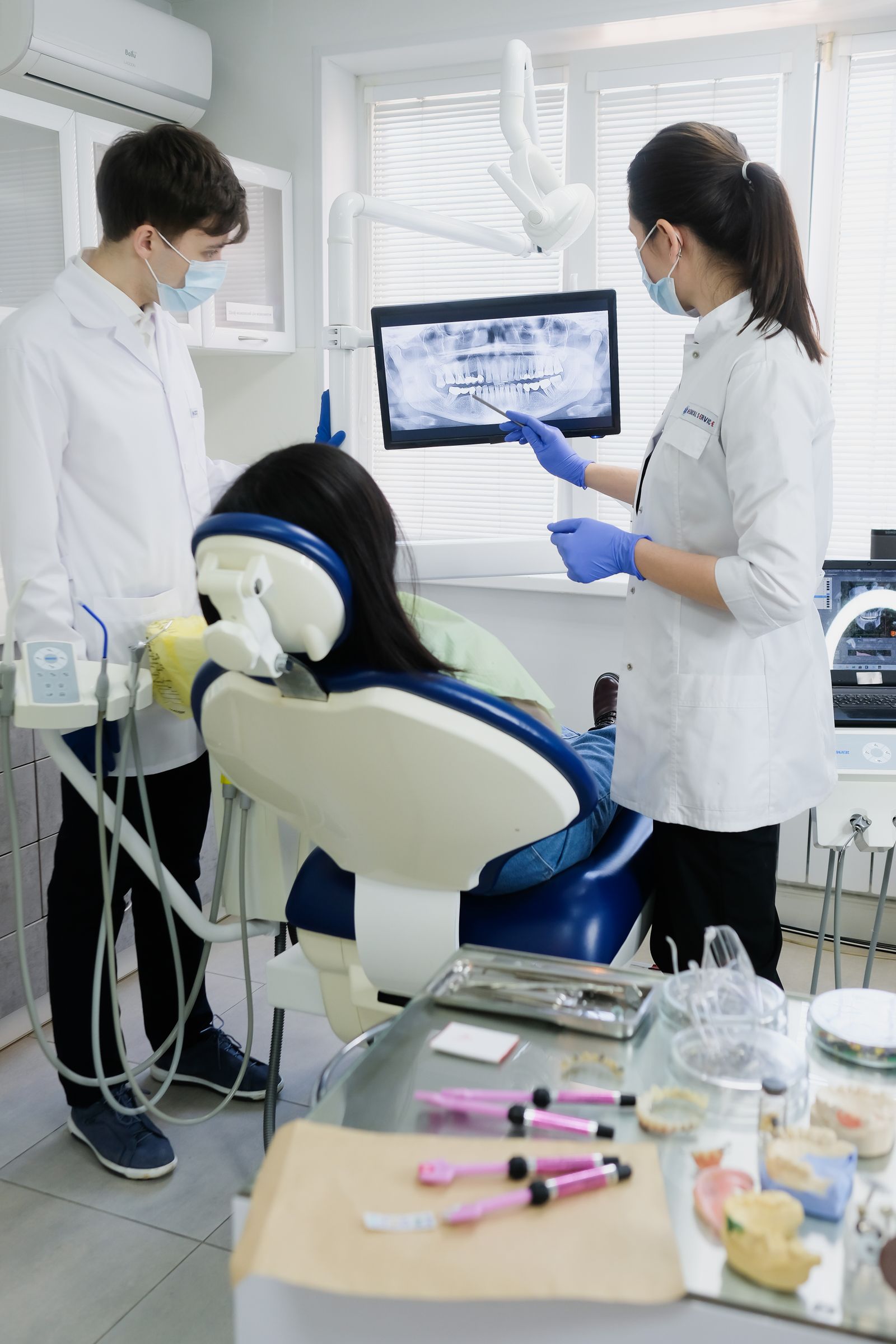
Teeth don’t heal. A chipped fingernail regrows; a cracked tooth stays cracked, and untreated damage compounds — small cavities become large ones, large ones reach the nerve, and teeth that could have been patched end up extracted. Restorative dentistry is the discipline of stepping in at the right rung of that ladder, with the smallest repair that will genuinely last.
Fillings handle small to moderate decay — tooth-coloured composites, bonded and sculpted to disappear. Inlays and onlays, milled from ceramic, restore larger damage while preserving more natural tooth than a full crown. Crowns cap teeth too weakened to hold themselves together — after large decay, fractures, or root canals. Bridges and implant-supported restorations replace what’s missing entirely, and dentures — modern, precise ones — restore full arches. The principle at every rung: preserve maximum natural tooth, because nothing we make is better than what you grew.
The root canal is dentistry’s most unfairly feared procedure — and its most misunderstood. When decay or trauma reaches the nerve, the tooth becomes both painful and infected. A root canal removes the infected tissue, disinfects the canal system, and seals it — under local anaesthesia that makes the procedure feel like a long filling. It doesn’t cause the pain; it ends it. And it saves teeth that a generation ago were simply pulled.
Some patients arrive with years of accumulated problems — worn teeth, old failing fillings, missing molars, a bite that’s collapsed with them. Full-mouth rehabilitation sequences the repairs deliberately: stabilise infection first, rebuild the bite’s foundation, then restore section by section over planned visits. It’s transformative dentistry, and it starts with an honest map of where you are and a costed plan of where you’re going.
Restorations are judged over years, not at the mirror on fitting day — margins that stay sealed, bites that stay balanced, materials that wear like teeth do. Our dentists restore conservatively (the smallest repair that truly lasts), explain every option with its honest lifespan and cost, and coordinate crowns, implants, and root canals under one roof so your treatment plan has one author. When a tooth can be saved, we save it.


Whether it’s one broken tooth or a mouth that needs a full plan, book a restorative consultation at Dermax Medical Center in Dubai. You’ll leave with a clear map: what needs doing, in what order, and what it costs.
The procedure feels like a long filling — local anaesthesia covers it completely, and modern rotary techniques make it faster than its reputation. The pain people associate with root canals is the toothache before treatment; the root canal is what ends it. Mild tenderness for a few days after is the usual extent.
Composite fillings: typically 7-10 years. Ceramic crowns: 10-15 years and often beyond. Lifespan depends heavily on hygiene, bite forces, and grinding — a night guard for grinders is the cheapest life-extension available. We check all restorations at routine visits and repair small issues before they become replacements.
By how much healthy tooth remains. Fillings need enough surrounding structure to hold; when a tooth is mostly restoration or has cracked, a crown holds it together instead of wedging it apart. Inlays and onlays cover the middle ground. We'll show you the tooth on camera so the recommendation explains itself.
For molars, almost always — root-treated teeth become more brittle, and chewing forces on back teeth will eventually crack an uncrowned one. Front teeth with minimal damage can sometimes skip the crown. Sealing the tooth properly and promptly is what protects the root canal's success.
Three main routes: an implant (independent, preserves bone, doesn't touch neighbours), a bridge (faster, but requires reshaping adjacent teeth), or a removable partial denture (most economical). Each has honest trade-offs in longevity, cost, and comfort — we'll lay them out for your specific gap rather than defaulting to the most expensive.
Only for good reason. Intact old amalgam fillings doing their job don't need removal on principle. Replacement makes sense when there's decay underneath, cracking, leakage, or when they sit in your smile line and bother you. We assess each one individually — replacing sound restorations trades tooth structure for cosmetics, and we'll tell you when that trade isn't worth it.

Dermax Medical Center, your premier destination for medical, health, and aesthetic care in Dubai
DermaX Medical Center © 2026 All Rights Reserved. | Made with ♥ by BAYREZ
WhatsApp us